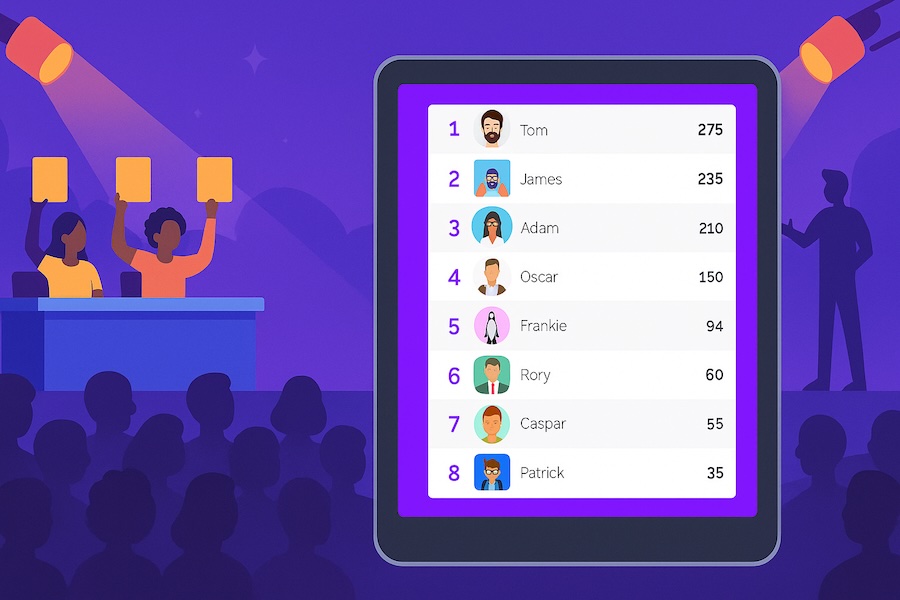
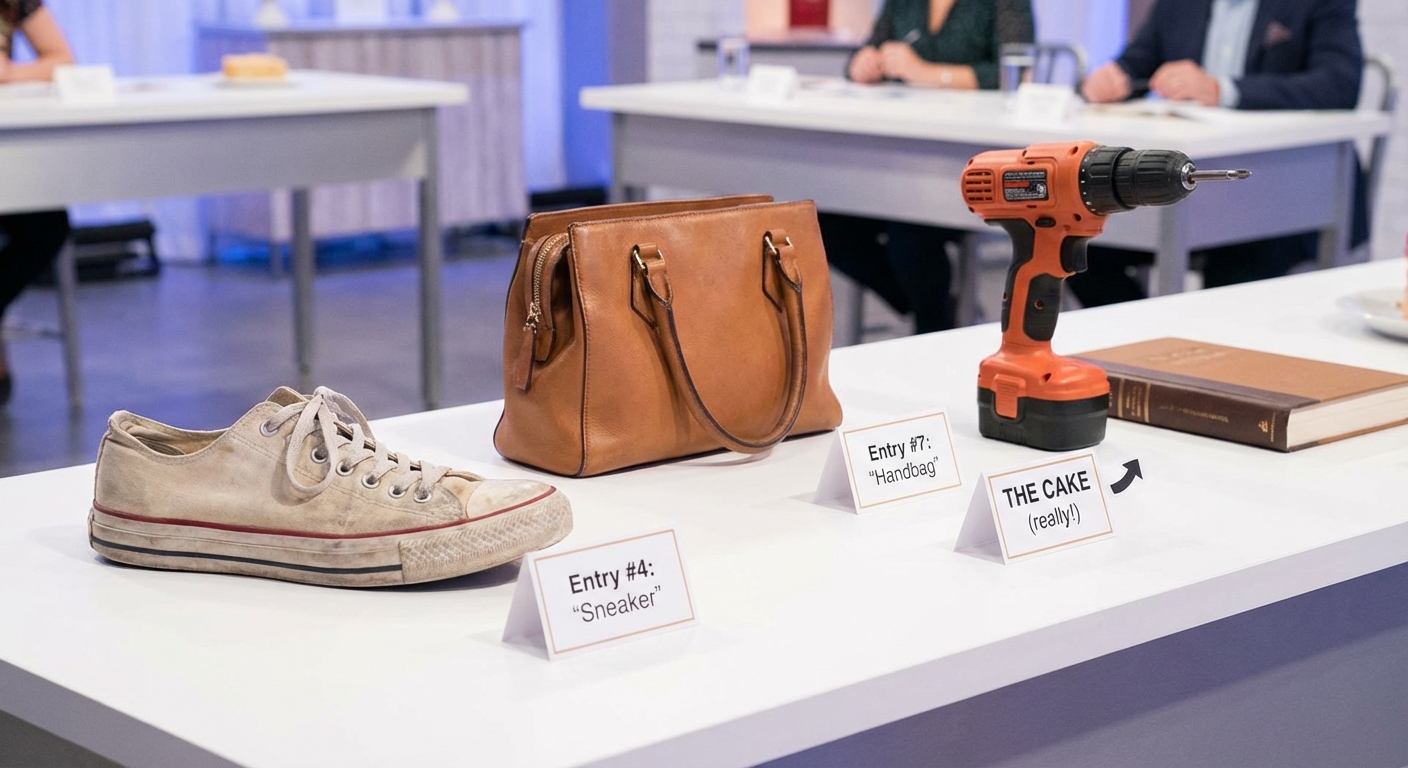
Netflix's Is It Cake? looks like a novelty show. Bakers sculpt hyperrealistic cakes that look exactly like sneakers, handbags, or power drills. Celebrity judges have 20 seconds and 10 feet of distance to figure out which object on the table is actually cake.
It's ridiculous. It's also a surprisingly sharp lesson in how competition judging works — and why getting it wrong is so easy.
The Show's Judging Format Is Smarter Than It Looks
Each episode works like this: three bakers create a cake disguised as an everyday object and arrange it alongside real decoy items. A panel of celebrity judges studies the display from at least 10 feet away for 20 seconds, then picks which one they think is cake.
- If the judges guess correctly, that baker is eliminated.
- If the baker fools the judges, they win $5,000.
- If multiple bakers fool the judges, the tiebreaker is a close-up inspection plus a taste test — judging for detail, texture, and flavour.
That's not one round of judging. It's three, each testing something different.
Distance, Detail, and Taste: A Three-Layer Scoring Rubric
The show's structure maps almost perfectly onto a real competition rubric:
| Round | Distance | What's Being Judged |
|---|---|---|
| First impression | 10 feet, 20 seconds | Overall visual impact — does it convince at a glance? |
| Close-up inspection | Right in front of them | Craftsmanship, surface detail, fine finishing |
| Taste test | Fork in hand | Flavour, texture, whether it's actually good cake |
Most competition organizers collapse all of this into a single "quality" score. Is It Cake? separates them — and that separation reveals things a single score hides. A cake might look flawless from across the room and fall apart under scrutiny. Or it might look rough but taste extraordinary. Different criteria catch different things.
This is exactly why competition rubrics should separate impression from execution, and execution from outcome.
The 20-Second Rule: First Impressions Are a Real Criterion
One detail that competition organizers often overlook: first impressions matter, and they're worth scoring explicitly.
The judges on Is It Cake? aren't given unlimited time to inspect the display. They get 20 seconds. That constraint is intentional — it forces the judging to reflect how the work reads at first glance, not just after prolonged analysis.
For events like talent shows, presentation competitions, or product demos, "impact in the first 30 seconds" is a legitimate criterion. If you're not measuring it, you're missing information.
What the Tiebreaker Teaches Us About Weighted Scoring
When multiple bakers fool the judges, the show doesn't flip a coin. It runs a second, more granular round — close-up detail assessment and a taste test.
This is a good model for handling ties in any competition:
- Macro score (does it work overall?) eliminates weak entries
- Detail score (is the craft exceptional?) separates the strong ones
- Experience score (how does it feel to engage with it?) picks the winner
If your event ends in a tie, don't average more of the same scores. Add a new dimension. Ask judges to evaluate something they weren't measuring before — a live Q&A, a deeper look at process, a practical demonstration.
The "Cake or Cash" Round: When the Contestant Becomes the Judge
After winning, the baker faces one more twist: a "Cake or Cash" round. Two identical bundles of cash sit in front of them. One is real. One is cake. They have to identify which is which to double their winnings.
The baker — who has spent eight hours becoming an expert in disguising things as real objects — now has to think like a judge.
It's a clever reversal, and it highlights something real: the best competitors understand how judges think. In any well-designed competition, participants who understand the judging criteria have a legitimate advantage. That's not gaming the system — it's the point. Transparent criteria make better competitors.

How to Apply This to Your Event
Separate your criteria
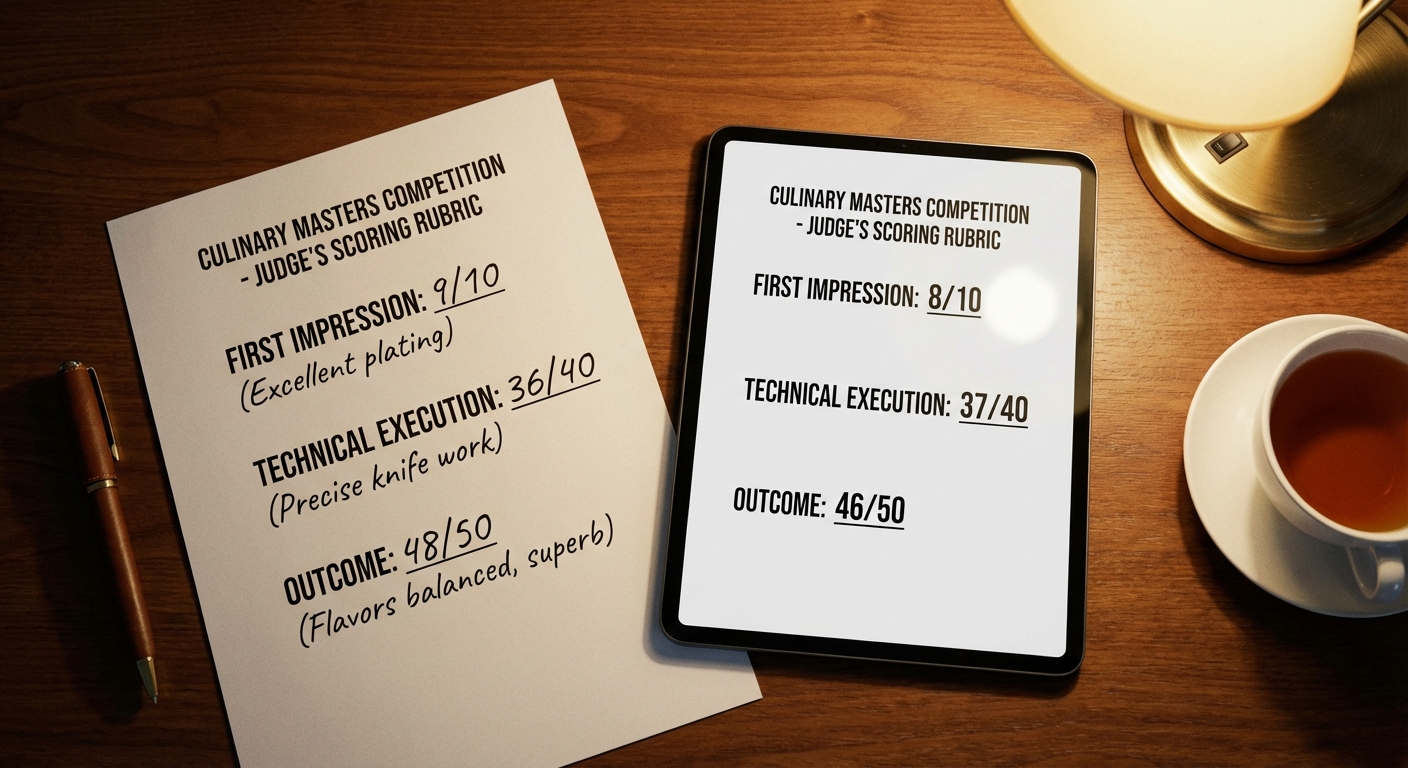
Don't ask judges to give a single "quality" score. Break it into distinct dimensions — first impression, technical execution, outcome — and weight them according to what your competition actually values. A well-designed scoring rubric makes this easier to communicate to both judges and participants.
Time-bound at least one round
A short, time-limited judging pass (like the 20-second rule) removes the bias that comes from extended deliberation. It captures instinct, which is often the fairest signal.
Design your tiebreaker in advance
Know before the event starts what happens if scores are equal. Adding a tiebreaker after the fact looks arbitrary and feels unfair to participants.
Make criteria public
The bakers on Is It Cake? know exactly what they're being judged on: fool the judges from across the room, survive the close-up, win on taste. Your participants deserve the same clarity.
Running a competition with multiple judges and custom criteria? ScoreJudge handles the scoring, the leaderboard, and the tiebreakers — so you can focus on running a good event.