How a 250-Guest Chili Cook-Off Is Ditching Paper Ballots
Every one of around 250 guests at the Birch Lane Chili Showdown is a judge. Here's why paper ballots stopped working, and how the vote is moving to phones.
Article Contents
This story is based on a real competition, but the names have been changed.
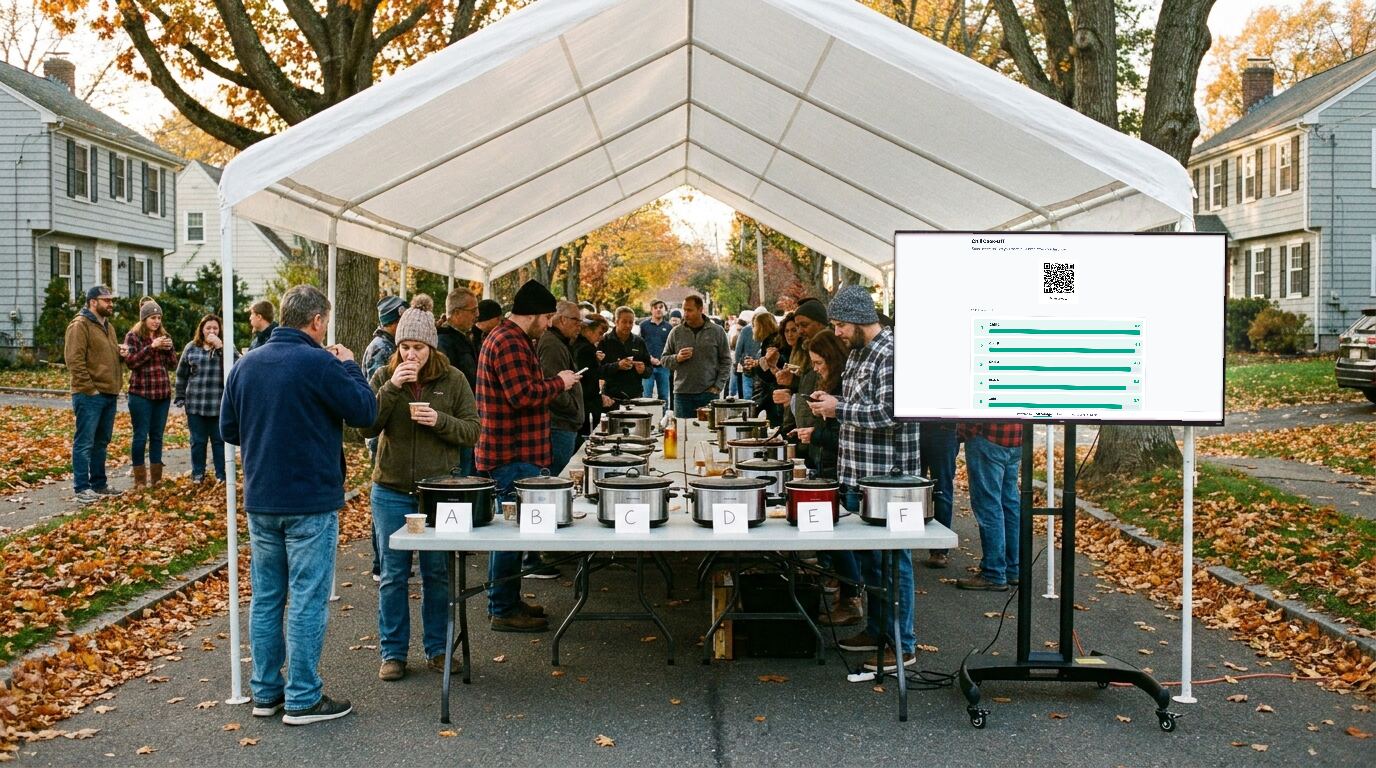
Every fall, Birch Lane closes to traffic for a day. A big tent goes up, 14 slow cookers line up under it, and around 250 neighbors turn up hungry. Every one of them is a judge.
For years, the Birch Lane Chili Showdown picked its winner on paper. This year, the vote is moving to phones. Here's why paper stopped working, and how Dave, who runs the Showdown, is setting up the switch.
From a Dinner Party to a Street Party
The Showdown started as a dinner party. Dave invited a few friends, and everyone made a different chili. Then the neighbors wanted in, and it kept growing. Today it takes over the whole street, with games for the kids.
The tasting is blind. Each pot gets a letter, and nobody knows whose chili is whose until the winner is announced. And there's no judging panel:
"It's not just judges. It's the whole fanbase. It's all of the guests. Everyone's a judge."
The Trouble With Paper
For years, Dave printed hundreds of scorecards. At the end of the day, the cards came back in a pile. A few people read them out while someone kept the tally, and after an afternoon of chili and drinks, nobody was at their sharpest.
"There'd be a group of people coming back saying, 'Five, four, three, two, two, two, three, three, four, four, five,' and just literally call it out."

Dave also tried a Google Form, with guests rating each chili from 1 to 5 on aroma, flavor, consistency and overall taste. Someone still had to turn 250 answers into a winner. And last year, two chilis finished on exactly the same score. The winner was whichever had the better average, worked out on the spot.
"I've been going at the old-fashioned, very rudimentary way, and it's been awful."
What Dave Wanted
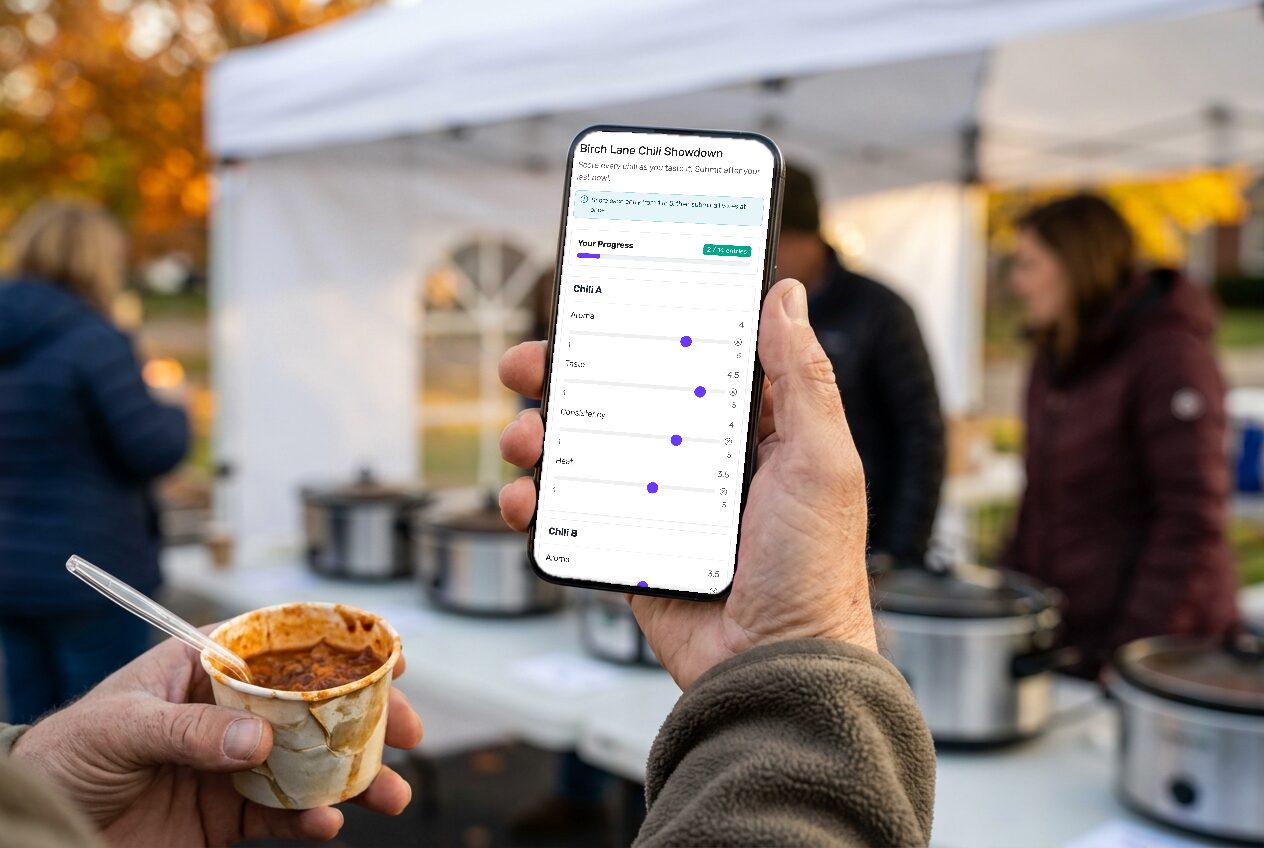
Dave knew what the fix should look like before finding us. Put up QR codes, and guests scan one with their phone. They see all 14 chilis, score each one, and send everything in at the end. It also had to fit how people really taste at the Showdown:
"A lot of times people try a couple, make some notes, and then try some more, and make some notes, and then they do their final scoring and then do their submission."
Building it from scratch was an option. Dave had already built a website with an AI coding tool, though, and one project like that was enough. So Dave booked a call with us at ScoreJudge, the online judging tool we make. We set up a test version of the Showdown during the call. It took a few minutes, and Dave's verdict was short:
"This all seems perfectly dialed in."
The Plan for the Day
Most of the planning has nothing to do with technology:
- Everyone still votes. The crowd vote is what makes the Showdown, so it stays. No panel, no special judges.
- Letters, not names. The 14 chilis go in as Chili A to Chili N, so the tasting stays blind.
- A short scoring sheet. Aroma, taste and heat, on the same 1 to 5 scale guests already know.
- The rules on the mic. Before the first bowl, Dave explains how voting works.
One thing we'd add for any cook-off like this: agree on a tie-break before the day, like "the higher taste score wins", and announce it with the rules. After last year, that one matters. A formal panel of judges can use a longer sheet, and our chili cook-off judging page lists the classic criteria.
What Changes on the Day
On the day, guests will scan a code on the tent, the tables or the big screen. They'll score each chili on their phone between bites and send in their scores after the last bowl. There will be no clipboards, no pencils and no pile of cards to guard.
And at the end, there will be nothing to count. When voting closes, the ranking will already be on the big screen. The only job left will be matching the letters to the cooks and announcing the winner.
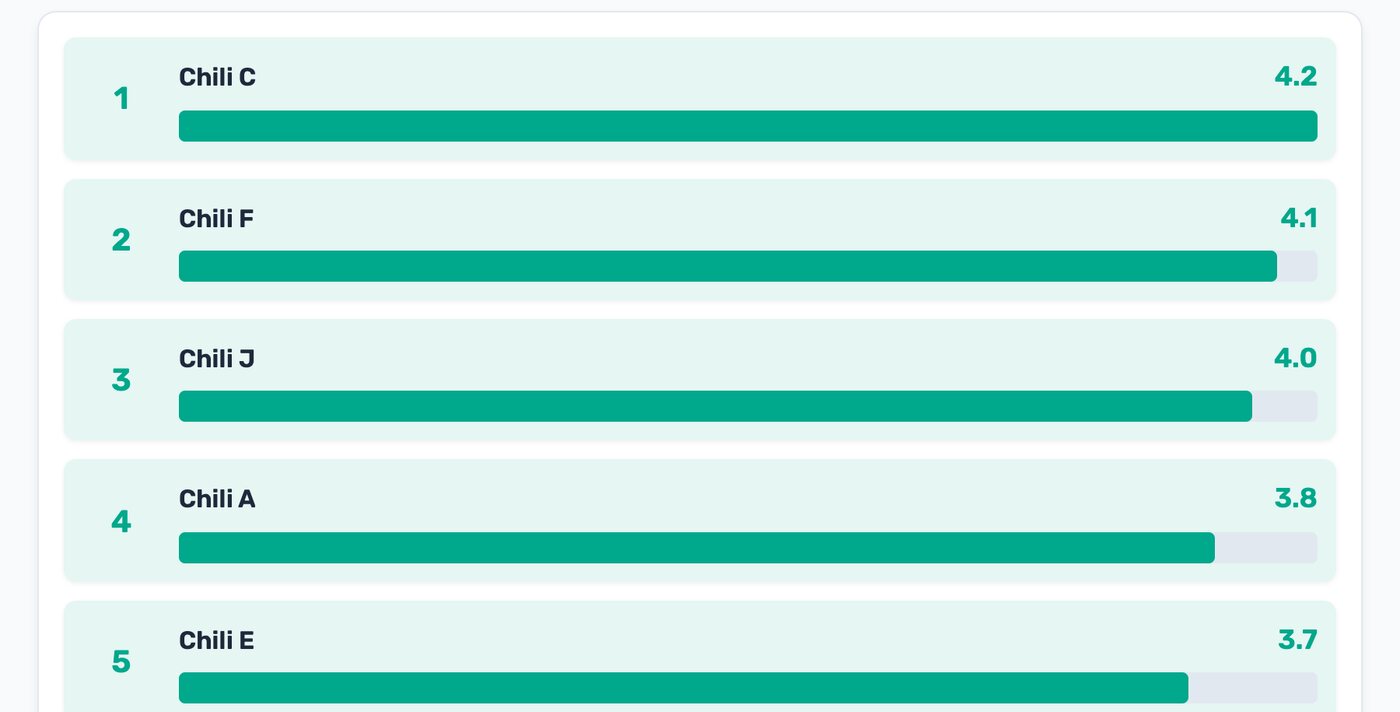
A preview of the results screen.
We'll update this story after the Showdown.
If your cook-off lets everyone vote, you can set up the same thing in a few minutes. Our page on audience voting explains how a crowd vote works.

Written by Caspar von Wrede
Founder of Score Judge. Building tools for real-time competition judging at live events.